Member Login
  • Members
  • News
  • Projects
  • Toolkits
  • Case Studies
  • About Us

GREEN LEASE TOOLKIT

  • USING THE TOOLKIT
  • ABOUT GREEN LEASES
  • GREEN LEASE CLAUSES
  • GREEN LEASE ESSENTIALS
  • HEADS OF TERMS GUIDANCE
  • OWNER & OCCUPIER ENGAGEMENT
  • CASE STUDIES
  • USEFUL RESOURCES
  • TOOLKIT GOVERNANCE
  • TOOLKIT FEEDBACK
  • QUICK DOWNLOAD: ALL DOCUMENTS

CASE STUDIES

We are pleased to share case studies of green leases in practice.

If you would also like to share a story, please email: greenlease@betterbuildingspartnership.co.uk

British Land Image

Split Incentive: British Land

Split incentive – where costs and benefits sit in different places – is often cited as one of the biggest barriers to decarbonising commercial real estate. Owners fund upgrades, while occupiers benefit from reduced energy costs, resulting in delayed action and underinvestment.

In this case study, Emily Dale, Senior Sustainability Manager at British Land demonstrates how this challenge can be overcome through long-term thinking, early occupier engagement and collaborative investment. By aligning interests and sharing both costs and benefits, they show how the split incentive can be transformed from a barrier into an opportunity—delivering more efficient, resilient buildings and creating shared value for both investors and occupiers. Read the full case study here.

Big Energy Race

The Big Energy Race: Engaging Occupiers to Drive Energy Reduction

Reducing operational energy use requires more than efficient systems - it depends on the behaviours and engagement of those using the space every day. Yet motivating consistent action across diverse occupiers can be a challenge, particularly in multi-let environments where responsibility for energy use is shared.

This case study highlights how Workspace addressed this through The Big Energy Race - a portfolio-wide campaign designed to engage customers, build awareness and drive measurable energy savings. By combining targeted incentives, on-the-ground engagement and practical tools to support behaviour change, the initiative demonstrates how occupier collaboration can translate into meaningful reductions in energy use, while strengthening relationships and embedding sustainability into everyday workplace culture. Read the full case study here.

20 Water Street

JLL: 20 Water Street

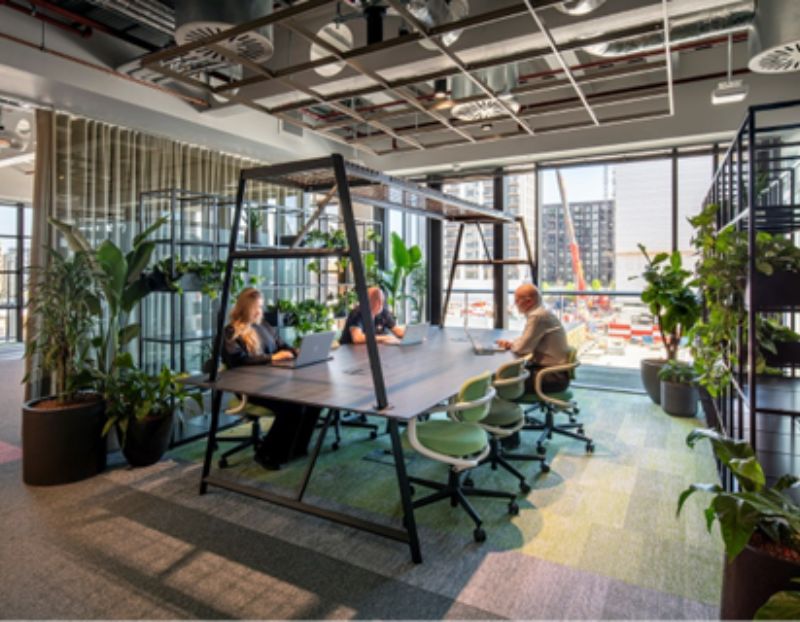
In November 2022, JLL introduced its new 20 Water Street workspace in Wood Wharf, Canary Wharf, London, representing an evolution in workplace design. Encompassing 38,000 sq ft, the office reflects JLL's dedication to sustainability and inclusivity, achieved through the digitalisation of thoughtful design principles.  
 
Designed to accommodate over 1,000 employees, 20 Water Street’s circular design ethos is reflected in all aspects of construction and operation. The building targets a substantial 40% reduction in embodied carbon compared to standard office fit-outs, surpassing this target with 42%. Additionally, 79% of the office’s furniture is second life, a fully electric fit-out with 100% Renewable Energy supply, and durat worktops from 100% recyclable post industrial plastic waste.   
 
The office’s digitalised features prioritise environmental consciousness and occupier wellbeing, exemplified by 44 IEQ sensors reporting environmental quality, over 200 sensors tracking occupancy and more than 100 energy monitors all serving as a unified interface. With inclusivity woven into the design, 20 Water Street offers gender-neutral bathrooms, calm reflection spaces, and adherence to JLL's Inclusive Workplace Standards. 
 

Holding image

Green Leases at Grosvenor

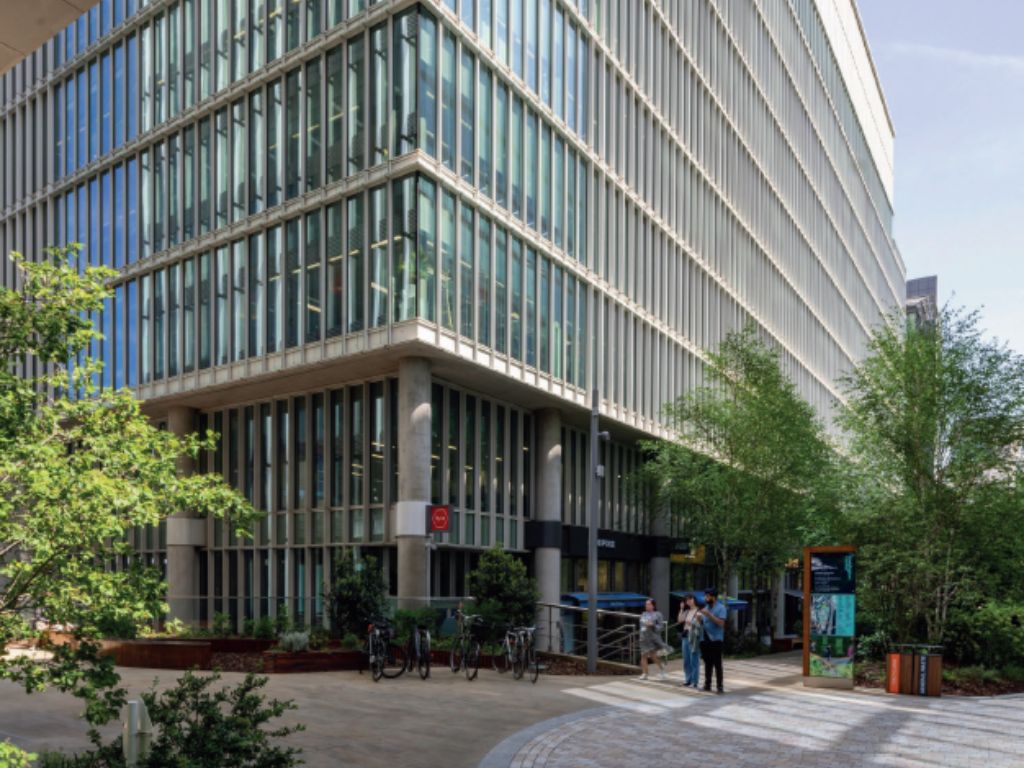
Within Grosvenor's London portfolio, it is estimated that occupiers contribute to over 90% of operational emissions from buildings. As a part of the business's commitment to achieving net zero by 2040, a net-zero carbon pathway has been published. Recognising the necessity for collaboration, Grosvenor has implemented green lease clauses since 2020, now encompassing more than 220 leases, covering areas such as sustainable energy procurement, waste management, data sharing, delivery consolidation, and building EPCs and alterations.

A policy has been instituted requiring all new leases to incorporate green lease clauses across the aforementioned five areas. The evolution of these clauses has involved refining language to facilitate ease of approval, fostering positive relationships, and addressing occupiers' practical considerations. Adjustments include allowing an opt-out for procuring renewable electricity through Grosvenor after 12 months, permitting occupiers to procure their own deep green electricity and green waste provider while still maintaining green lease status, sector-specific terminology, and specifying non-negotiable and negotiable clauses based on priority areas.

Operational efficiency has been enhanced by adapting terminology to expedite lease approval, thereby reducing the administrative burden on the Operations team. Data capture processes have been streamlined to monitor the overall performance of signed green lease clauses and identify areas for improvement. Grosvenor reports an overall positive response to green leases across its portfolio and emphasises early presentation of green clauses in lease discussions with occupiers, accompanied by a plain English version for transparency.

GREEN LEASE TOOLKIT

  • USING THE TOOLKIT
  • ABOUT GREEN LEASES
  • GREEN LEASE CLAUSES
  • GREEN LEASE ESSENTIALS
  • HEADS OF TERMS GUIDANCE
  • OWNER & OCCUPIER ENGAGEMENT
  • CASE STUDIES
  • USEFUL RESOURCES
  • TOOLKIT GOVERNANCE
  • TOOLKIT FEEDBACK
  • QUICK DOWNLOAD: ALL DOCUMENTS
Previous pageOWNER & OCCUPIER ENGAGEMENT
Page 29 of 33
Next pageUSEFUL RESOURCES

Connect with us

The BBP is a collaboration of leading property owners who are working together to improve the sustainability of commercial buildings.

Contact Us

Managing Agents Partnership

The Managing Agents Partnership is a collaboration of the UK’s leading property managers who are committed to improving the sustainable management of commercial property assets

Managing Agents Partnership

All Resources

Connect with us

Twitter LinkedIn

Signup for our newsletter

Subscribe to our mailing list

* indicates required

© Better Buildings Partnership 2026

  • Credits
  • Terms & Conditions
  • Privacy policy
  • Cookie policy
  • Accessibility

Crafted by Un.titled